
The Brain on Autopilot: The Recipe for Viral Content

Have you ever fallen down the rabbit hole of YouTube Shorts, mindlessly scrolling through video after video, only to realize hours have somehow vanished? While the engaging nature and intriguing content certainly play a role, there’s a deeper reason for this phenomenon: ease of processing. Viral short-form content often bypasses conscious thought, seamlessly integrating into our mental landscape without requiring a significant energy expenditure from our brains. In simpler terms, the easier it is to understand, the more likely it is to go viral.
This concept aligns with the observations of YouTuber Jenny Hoyos. In an interview with Jay Clouse, she revealed a fascinating strategy: after crafting a catchy thumbnail to grab viewers’ attention, she deliberately lowers the reading level of her content to below 5th grade. This isn’t accidental. Similar tactics are employed by YouTube giant MrBeast, whose Shorts consistently rack up millions of views — and boast a readability level comparable to a 1st grader! But why this emphasis on simplicity?
Watch this interesting interview!
The Two Speeds of Your Mind: System 1 vs. System 2
The answer lies in how our brains function. Nobel laureate Daniel Kahneman introduced the concept of two distinct thinking systems:
System 1: This is our fast, intuitive, and effortless thinking mode. Think of it as your brain on autopilot, handling basic tasks like recognizing faces, comprehending simple language, and navigating familiar situations. It’s the system you primarily use when scrolling through YouTube Shorts.
System 2: In contrast, System 2 is slow, deliberate, and requires focused attention. This is your brain in problem-solving mode, kicking in when you tackle complex calculations or engage in critical thinking. Imagine solving a challenging math equation — that’s System 2 at work.
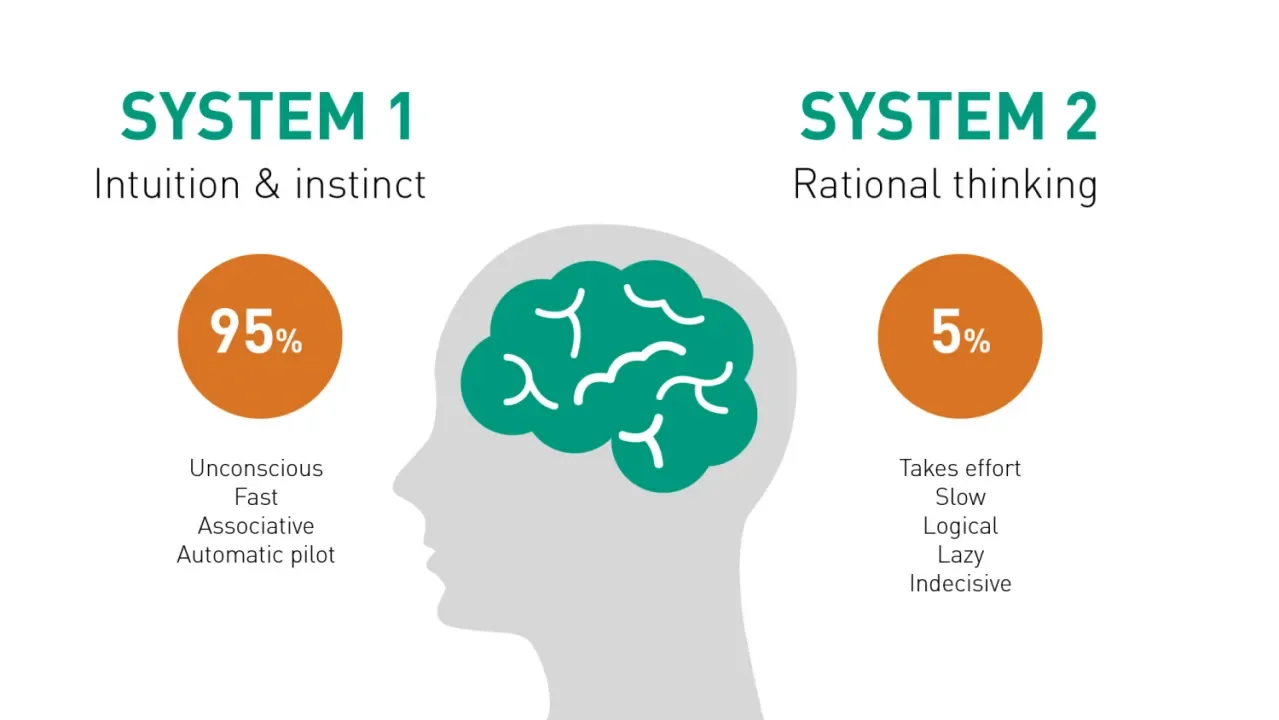
System 1 & System 2 Thinking. Source: https://www.rogerleishman.com/2017/12/thing1.html
Our brains naturally prioritize efficiency, defaulting to System 1 thinking whenever possible. It’s an evolutionary adaptation — why waste precious energy on something simple when you can handle it effortlessly? Studies by Cognitive scientists suggest that only around 5% of our thinking is consciously controlled, with the remaining 95% operating unconsciously. There’s also ongoing debate about the clear-cut separation of these systems, with some theories proposing a more collaborative model where both systems work in tandem.
Why readibility is important? Readability is the cornerstone of effective communication. It ensures your content is clear and accessible to a wide audience, regardless of their reading level. Imagine a bridge — a poorly designed one might be difficult or impossible to cross, limiting who can reach the other side. Similarly, complex language or jargon acts as a barrier, hindering your message from reaching its destination. Here’s the key: high readability, often likened to a lower grade level, allows information to flow effortlessly into the “System 1” thinking of your audience. This fast, intuitive mode of processing makes it easier to grasp your message without requiring mental strain. By prioritizing readability, you create a seamless bridge for your ideas, fostering understanding and engagement with a diverse range of consumers.
The Marketer’s Playground: The System 1 Loophole
Marketers are well aware of the power of System 1 thinking. They craft advertisements that trigger subconscious memories and emotions without requiring complex thought. Stories are more captivating than logic-driven pitches, and keeping content simple ensures maximum reach. This isn’t inherently negative, but it highlights the importance of mindful consumption as viewers.
The Art of Effortless Engagement: Content for System 1 Thinking
In today’s fast-paced digital world, capturing and holding viewers’ attention is a constant battle (I have addressed the low attention span in one of my blog). The key lies in entering System 1 thinking — the fast, intuitive, and effortless mode that governs most of our daily decisions. By creating content specifically designed for this system, we can unlock the power of effortless engagement.
Readability: The Stepping Stones to Understanding
Imagine traversing a stream — clear, well-placed stepping stones ensure a smooth journey. Similarly, readability acts as the stepping stones in content creation. Aim for clarity and simplicity. Ditch complex jargon and favor concise sentences that are easy to follow. Think “explain it like I’m a fifth grader” and you’re on the right track. This ensures your message flows effortlessly, minimizing the mental effort required from viewers and keeping them in System 1 mode.
Hook ’Em Early: The Salient Effect in Action
The first impression is everything, and in the digital world, it’s all about those crucial first 100 milliseconds. This is the realm of the “salient effect,” where visuals and information make a split-second impact. Use this window to your advantage. Grab attention with a captivating image, a thought-provoking question, or an action that sparks curiosity. Think of it as the enticing aroma wafting from a bakery — it instantly draws you in and makes you want to explore further.
Subconscious Priming: Planting the Seeds of Perception
Subconscious priming is a powerful tool that taps into viewers’ existing knowledge and emotions without them even realizing it. Think of it like planting a seed in someone’s mind. By using visuals and sounds that subtly trigger memories and associations, you can influence their perception without requiring conscious thought. For example, showcasing happy faces and uplifting music subconsciously creates a positive atmosphere, making viewers more receptive to your message.
The Power of Storytelling: Logic Takes a Backseat
While logic plays a vital role in complex decision-making, emotions often hold the key to engagement. This is where the power of storytelling shines. People connect with stories on a visceral level. Weave a narrative, even a simple one, that resonates with your audience. This could be a relatable anecdote, a humorous skit, or a problem-solution storyline. When viewers connect with the narrative on an emotional level, they’re more likely to stay engaged and retain the information presented.
Beyond Engagement: The Importance of Balance
While System 1 thinking plays a crucial role in content consumption, it’s important to strive for a balance. Overreliance on this mode can lead to shallow processing and a lack of critical thinking. Consider incorporating elements that encourage viewers to occasionally switch to System 2 thinking, to make conscious effort to remember their product and leaves the impression. Include calls to action that prompt viewers to explore further or offer resources for deeper learning. This creates a well-rounded content experience that leverages the strengths of both thinking systems.
The Takeaway: Not to exploit
By understanding the power of System 1 thinking and employing these strategies — readability, the salient effect, subconscious priming, and storytelling — you can craft content that effortlessly captures attention, fosters engagement, and ultimately leaves a lasting impact on your viewers. Remember, the goal isn’t to manipulate, but to create a seamless and enjoyable experience that resonates with your audience on a deeper level.
The next time you find yourself scrolling through YouTube Shorts, take a moment to appreciate the science behind it. ;)
Thank You For Reading :)
