
Digital Snacking: Consuming in Bites
With rise in short form content and success of platforms providing it in the last decade, digital snacking has emerged as a new trend. But is it nourishing our minds or leaving us hungry for more?
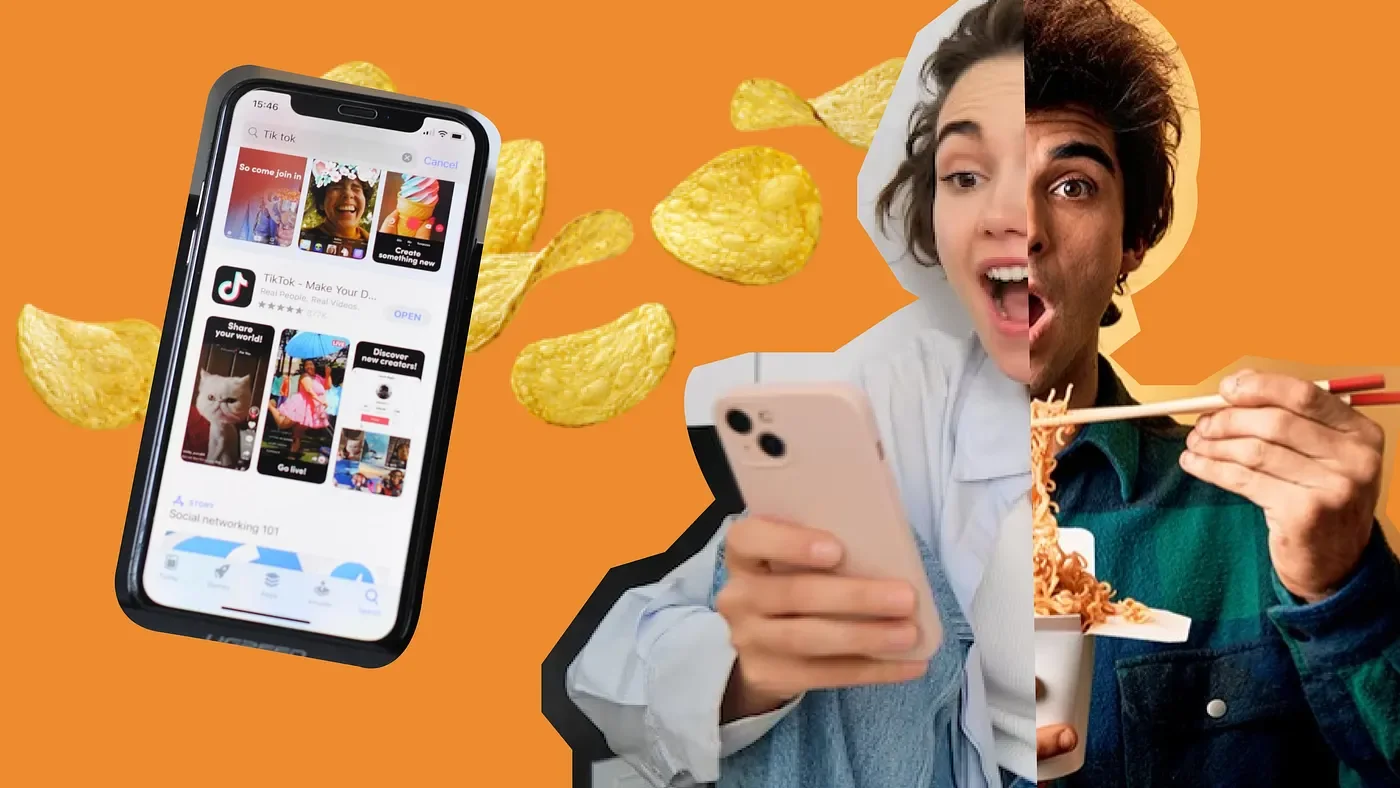
Snacking is a habit
Just like we crave snacks to satisfy a fleeting hunger pang, we often find ourselves drawn to short-form content for quick bursts of information and entertainment. Despite its seeming harmlessness, this trend begs the important question: Is the rise in popularity of “snackable” content a cause or a consequence of people’s short attention spans?
Short-form content’s popularity has skyrocketed in recent years, propelled by the rise of platforms like YouTube Shorts, Instagram Reels, and the undisputed king of short-form content, TikTok. This trend traces back to 2013 with the introduction of Vine, which popularized the concept of “6-second content.” Vine’s impact paved the way for the slightly longer, but still “snackable,” video format that dominates platforms like TikTok, Instagram, and YouTube today.
The shift towards snackable content is evident. Just like past generations often have focused on wholesome, sit-down meals, millennials and Gen Z are accustomed to readily available, bite-sized treats. Similar to this, short-form material has taken over as the favoured method of information consumption. Examples include bite-sized films, brief articles, and social media snippets. Although effective information dissemination has its benefits, this change presents certain questions.
Attention: The New Currency in the Information Age
Attention is limited in terms of both capacity and duration, so it is important to have ways to effectively manage the attentional resources we have available in order to make sense of the world. In the fast-paced digital world of the 21st century, the adage time is money has taken on a ‘s*** got real’ meaning. Every millisecond holds the potential for gain or loss, highlighting the power of time itself. However, with limited user attention spans, companies now face a unique challenge: capturing and holding that attention within a fleeting window. In this environment of abundant choices, consumers can easily shift their focus to other options if brands fail to convey their message efficiently.
With information being easily available or say our senses continuously stimulated by the content created or available it has hard to focus on single thing. The decline in attention span is been discussion topic in many fields and rises questions about lifestyle and well being ours. Studies suggest a potential decline from a 12-second attention span in 2000 to 8 seconds in 2015, further intensifying the pressure to grab users’ fleeting attention. The reason for shortening of attention span is
Short form content: cause or effect?
Similar to the egg and chicken dilemma, it’s unclear if the desire for short-form information is driven by our dwindling attention spans or vice versa. Some contend that we are now conditioned to seek knowledge in bite-sized bits due to the continual deluge of news, notifications, and stimulation that come with living in the digital age. This is why short-form content — which is frequently created with the intention of delivering dopamine spikes through comedy, drama, or controversy — is so alluring.
Some, however, contend that people’s attention spans may be getting shorter as a result of the availability of short-form content. Our brains are being trained to expect and want rapid gratification by the constant barrage of easily consumable information, which makes it challenging to focus on lengthier and complex stuff. Success of YouTube Shorts becoming the fastest-growing social media trend of 2021 exemplifies this.
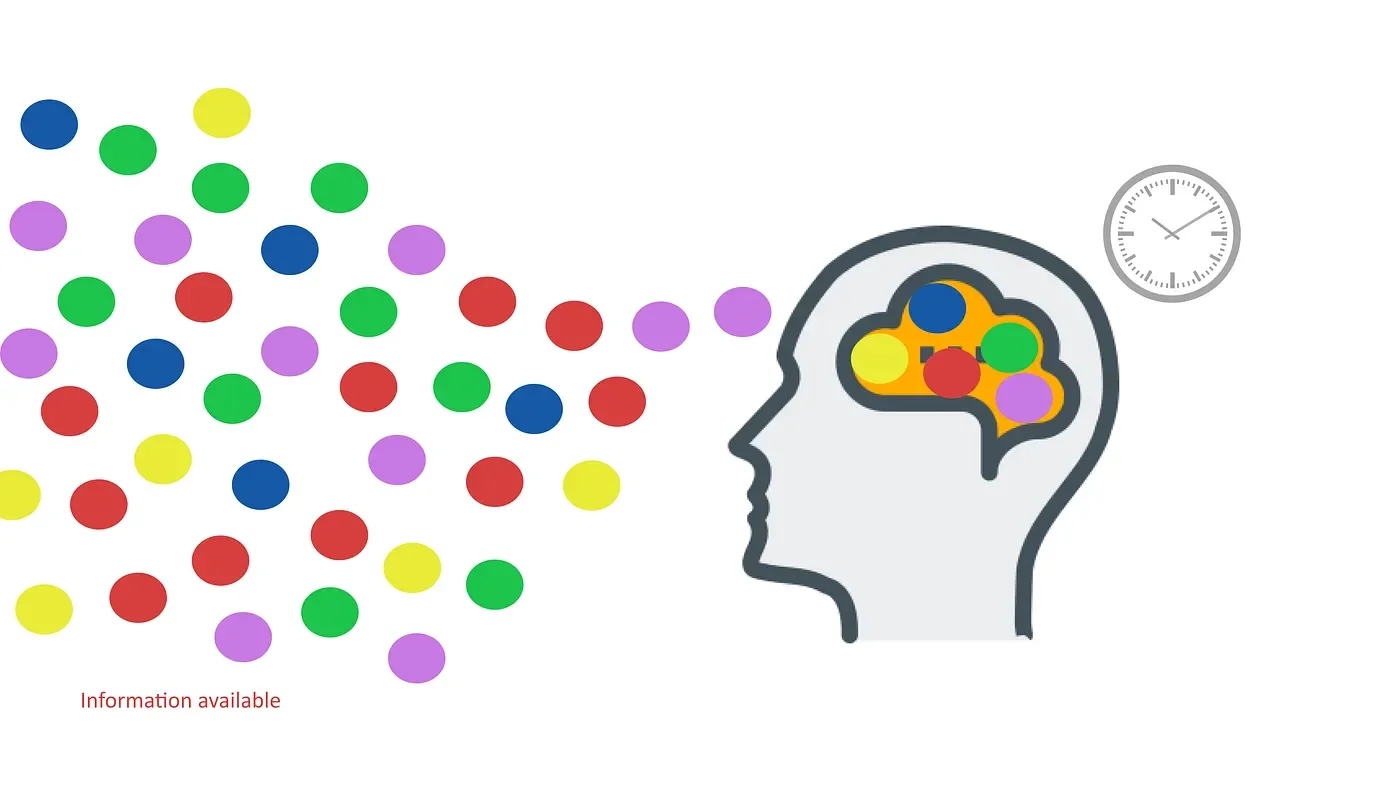
24hrs being limited in a day there is competition among information to find place in one’s brain
Bite-sized is a Trend?
Remember all those lectures from doctors, dietitians, and especially mom, about the dangers of mindless snacking? Turns out, the digital world has a similar struggle. Millennials and Gen Z are all about “snackifying” their information intake, devouring YouTube Shorts and Instagram Reels like there’s no tomorrow. It’s almost like we’re snacking our way through life, one dopamine hit at a time!
But fear not, fellow information nibblers! Short-form content isn’t going anywhere. It’s the digital buffet, offering bite-sized knowledge and entertainment that’s easy to swallow and leaves you wanting more. Businesses are jumping on the bandwagon, launching “snackable” products — the McFlurry of marketing, if you will. Quick, convenient, and (hopefully) delicious.
The question remains: are these digital snacks a nutritional powerhouse or a sugary void?
Benefits: Short-form content makes information more accessible than ever before. It’s like having a library of hors d’oeuvres — a little taste of everything! Plus, it fosters interaction and builds communities — think digital cocktail party with bite-sized discussions. And let’s not forget the information superhighway aspect. News and ideas travel faster than ever, like social media gossip spreading through the breakroom. Businesses can also use it for some marketing magic, conveying messages in a flash and grabbing attention spans shorter than a goldfish’s memory. (Speaking of which, did you know Instagram Reels can boost engagement by 22% compared to static posts? Now that’s a stat worth snacking on!)
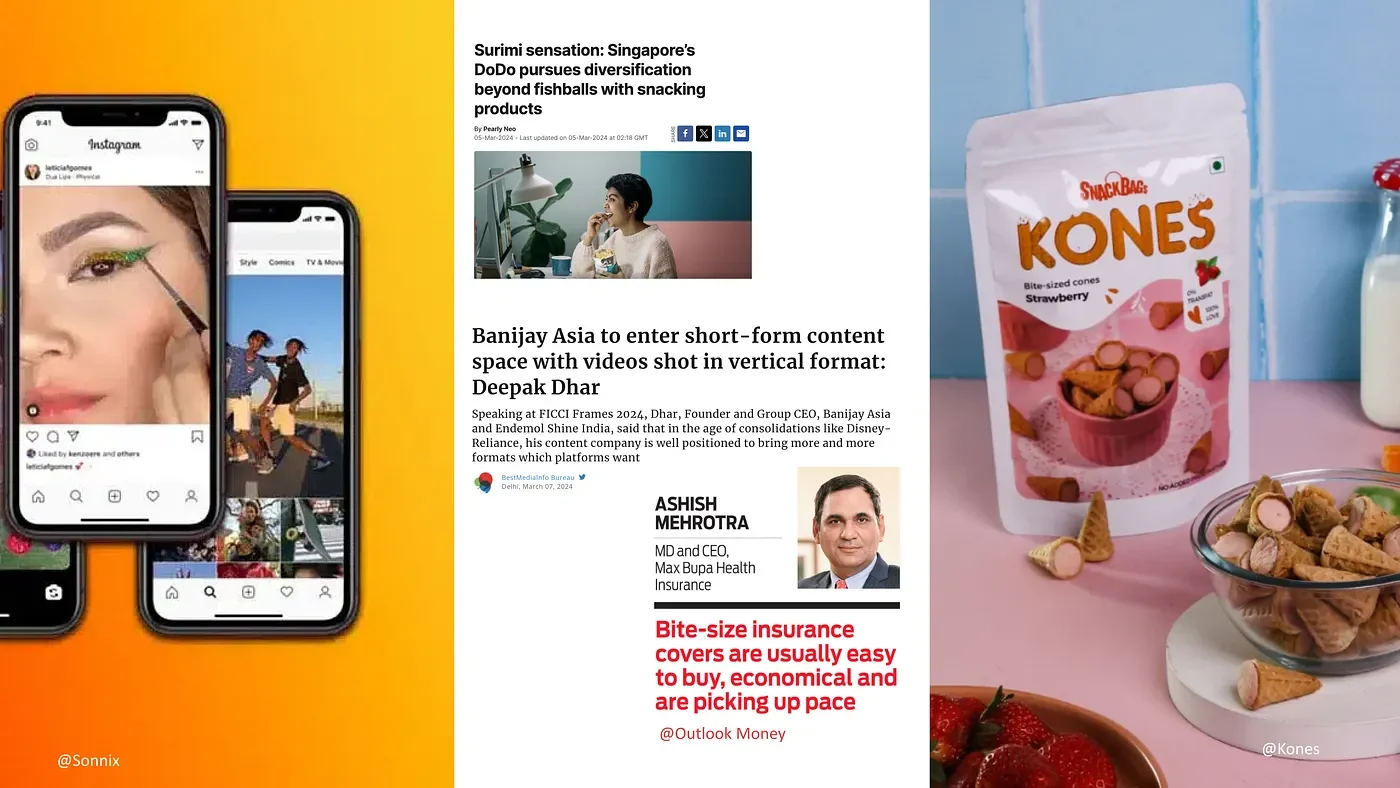
Bite sized products as trend
But hold on, there’s always a catch (or a stale chip at the bottom of the bag):
Adhura Gyaan — Superficial Learning: Short-form content can be like candy — sweet and satisfying in the moment, but offering little in terms of long-term sustenance. We might be getting a smorgasbord of information, but are we truly understanding it?
Shrinking Attention Spans: Constant exposure to bite-sized content could be training our brains to expect instant gratification, making it harder to focus on complex topics. It’s like trying to read a five-course meal’s menu while someone’s shoving popcorn in your face.
Misinformation Munchies: The rapid spread of information also opens the door to fake news masquerading as a delicious social media snack. We have to be careful not to mistake a clickbait headline for a gourmet infographic.
So, the verdict? Short-form content is here to stay, but like any good snack, enjoy it in moderation. Balance your digital snacking with some hearty meals of in-depth learning. After all, who wants a life filled with nothing but empty calories, even if they come in pretty packaging?
Thanks for reading!
